Taylor Griffin · 24 September 2026
Forest Expansions Bolster Wildlife Migration Routes Across Regional Boundaries
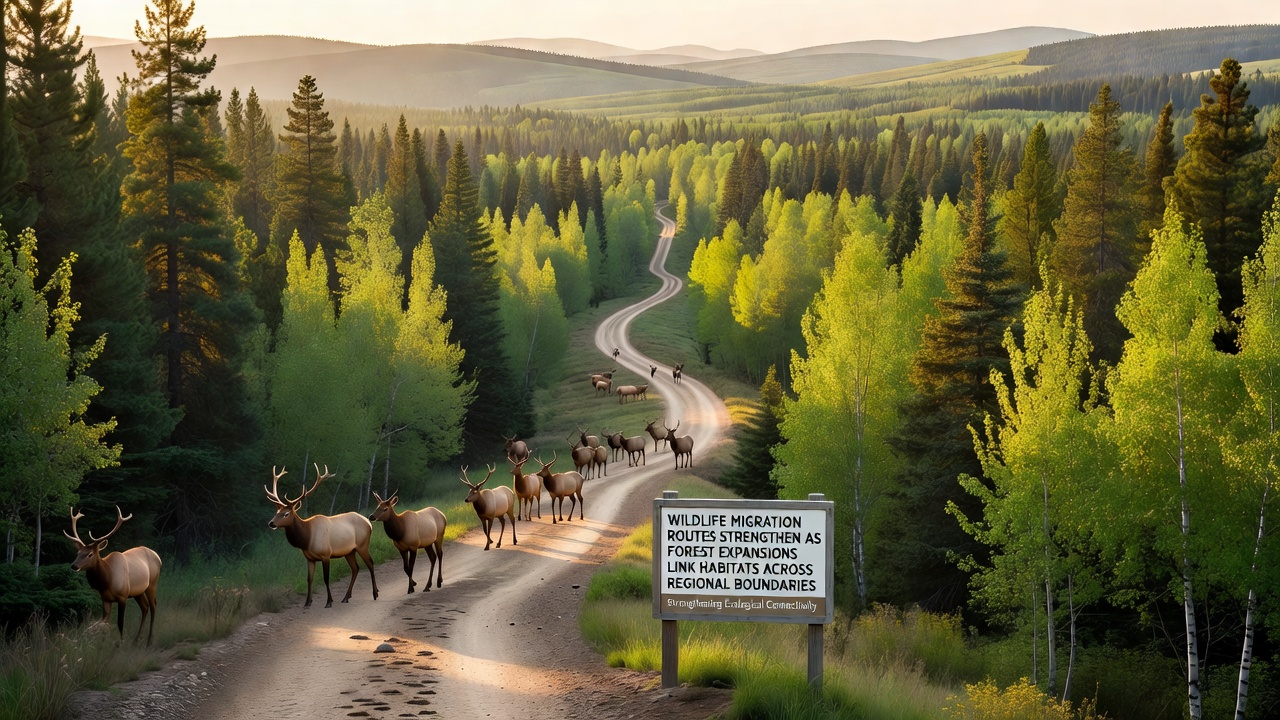
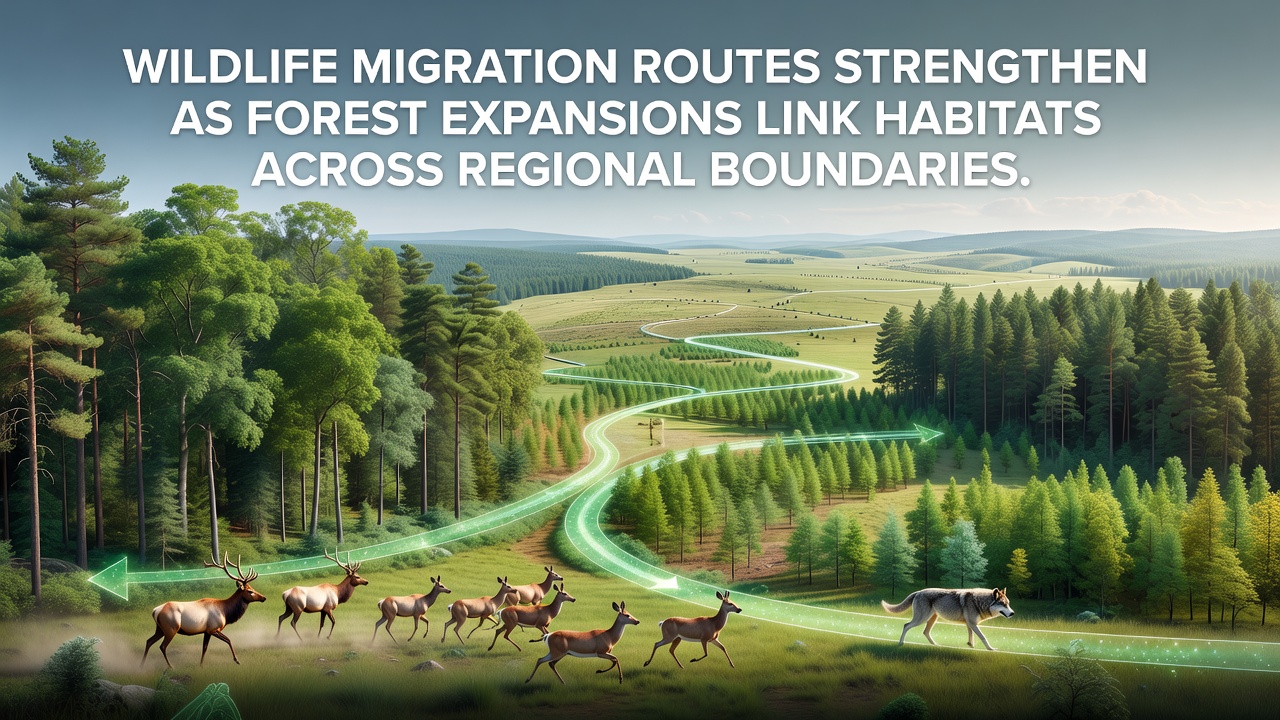
Forest expansions have created new connections between previously isolated habitats, and researchers tracking animal movements report that migration routes now show greater stability across state and national lines. Data collected over the past decade indicates these linkages allow species such as elk, wolves, and various bird populations to travel longer distances without encountering the barriers that once disrupted their paths. In September 2026 monitoring teams recorded increased crossing events at several key junctions where new tree cover has filled in gaps left by earlier logging and agricultural conversion.
Habitat Connectivity and Species Movement Patterns
Studies conducted by government agencies and university teams show that continuous forest cover reduces the energy costs animals face during seasonal travels, while genetic sampling reveals higher diversity in populations that can now reach distant breeding grounds. Observers note that corridors spanning multiple jurisdictions have formed where reforestation projects on private and public lands align, and satellite imagery confirms these strips often measure several kilometers wide in regions previously divided by roads and fields. Evidence from collar data on large mammals demonstrates that individuals cross former boundaries more frequently when canopy density reaches certain thresholds, and similar patterns appear in smaller species tracked through camera networks.
Regional Projects Driving Forest Growth
Programs in North America and Europe have planted millions of trees along river valleys and ridgelines, and these efforts have produced measurable increases in forest area according to land-use inventories. Canadian forestry reports highlight expansions in the boreal transition zones that now link protected areas separated for decades, whereas Australian restoration initiatives along the Great Dividing Range have narrowed gaps between eucalyptus stands used by migratory birds. European Union habitat directives have supported cross-border plantings that connect woodlands in Germany and Poland, allowing ungulates to follow traditional routes once blocked by intensive farming. Funding mechanisms vary by country yet share the goal of reversing fragmentation that accelerated in the twentieth century.
Local communities have participated in many of these plantings, and volunteer groups often maintain young stands until they reach self-sustaining heights. Figures from regional environmental offices indicate that combined public and private acreage under active expansion exceeds several hundred thousand hectares in targeted corridors, and remote sensing confirms canopy closure rates that support understory development essential for cover-dependent species.
Monitoring Methods and Data Collection
Researchers deploy GPS collars, acoustic sensors, and aerial surveys to measure route usage, and results consistently point to higher passage rates where forest patches join. One long-term study in the Rocky Mountain region found that mule deer now complete migrations in fewer days when new woodland bridges exist, and comparable findings emerge from Scandinavian projects tracking reindeer herds. International databases compile these observations so that patterns spanning continents become visible, and analysts note that climate-driven shifts in vegetation sometimes accelerate the value of human-assisted plantings.
Challenges remain where infrastructure such as highways still cuts through corridors, yet wildlife overpasses and underpasses have been installed at priority locations. Transportation agencies report reduced collision numbers at sites equipped with these structures, and the same data sets help planners identify where additional forest buffers would yield further gains. Partnerships between agencies in adjacent countries facilitate coordinated maintenance of these linear habitats, and shared mapping platforms allow updates on canopy development to reach field teams quickly.
Future Outlook for Connected Landscapes
Continued expansion depends on sustained investment and land-use policies that prioritize corridor integrity, and current projections based on planting rates suggest several additional linkages will reach functional width by the early 2030s. International agreements encourage neighboring regions to align restoration targets, and this coordination helps prevent the creation of new dead-ends at political boundaries. Data repositories maintained by organizations such as the U.S. Environmental Protection Agency and the European Environment Agency provide standardized metrics that support cross-regional comparisons of progress.
Conclusion
Forest expansions have already altered migration dynamics for numerous species, and ongoing projects continue to strengthen these networks. Monitoring programs supply the information needed to adjust strategies as conditions evolve, while evidence from multiple continents demonstrates that connected habitats support more resilient wildlife populations over time.