Katja Washington · 31 August 2026
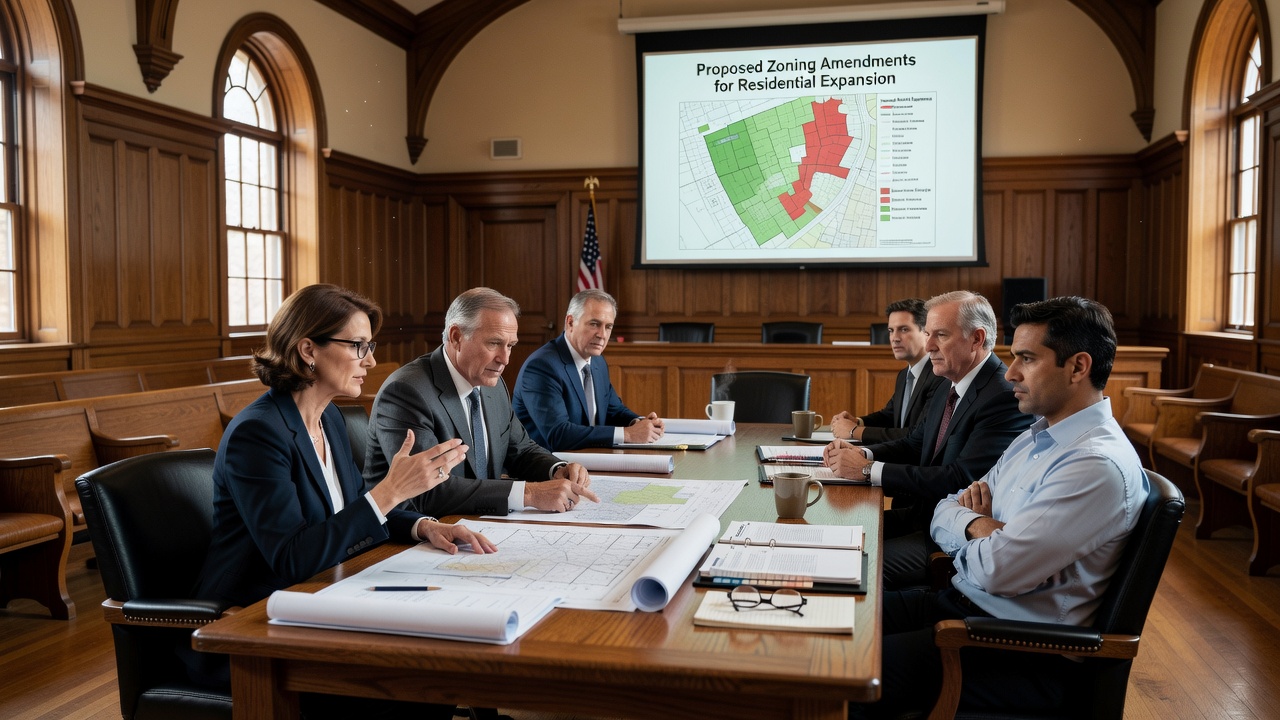
The Ivywald Council convened its monthly session to examine proposed modifications to local zoning laws intended to support increased residential construction. Discussions focused on balancing growth with community preservation amid rising housing demands.
Proposed Zoning Adjustments
The suggested changes involve altering several parcels of land from agricultural or commercial classifications to residential categories. This would permit the building of up to 800 new homes over the coming years. Council members reviewed detailed presentations on density limits, infrastructure requirements, and environmental protections. Key elements include incentives for mixed-income housing and requirements for energy-efficient designs. Analysts project that these adjustments could reduce average home prices by 10 percent through increased supply. Concerns about water supply and sewage capacity were addressed with assurances from utility providers that upgrades are planned concurrently. Further details encompassed revisions to parking minimums and lot sizes to encourage compact development patterns. The council emphasized data-driven decision making based on comprehensive surveys of current land use patterns.
Additional considerations addressed potential impacts on local wildlife corridors and stormwater management systems, with experts recommending buffer zones around sensitive areas. Economic models suggested job creation in construction and related sectors could reach 250 positions annually if the changes advance.
Community Impact and Next Steps
Attendees at the meeting included representatives from neighborhood associations, real estate developers, and environmental groups. Opinions varied widely, with some praising the potential for economic revitalization while others cautioned against rapid change. The debate highlighted the need for careful planning to avoid overburdening existing services such as schools and emergency response teams.
In conclusion, the council decided to establish a working group to refine the proposals based on public input. Additional public forums are planned, and a final ordinance vote is anticipated within three months. This ongoing process demonstrates Ivywald's proactive stance on managing local development responsibly and inclusively for all residents. Monitoring committees will track implementation metrics including housing affordability indices and traffic volume data post approval.