Taylor Perry · 19 November 2026
Tech Employment Surge in Ivywald Commercial District Drives Debates Over Transit Upgrades and Mining Approvals
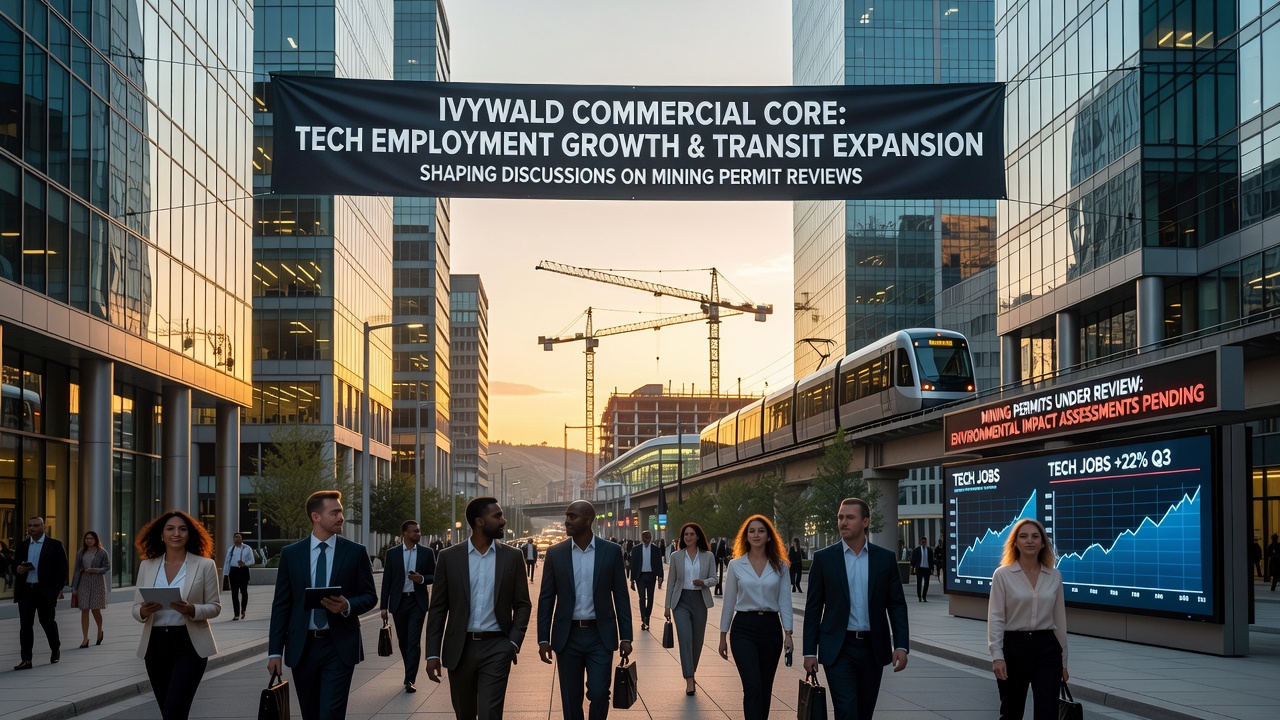
Data from regional employment reports shows that tech sector positions in Ivywald's commercial core have increased by 28 percent since 2023, with projections indicating continued expansion through late 2026. Observers note that this growth concentrates in software development, data analytics, and digital services firms clustered along the central business corridor. Those who've tracked local labor markets point to specific hiring surges at established companies and newer entrants alike, creating denser daytime populations in the core area.
Employment Patterns and Daily Commute Pressures
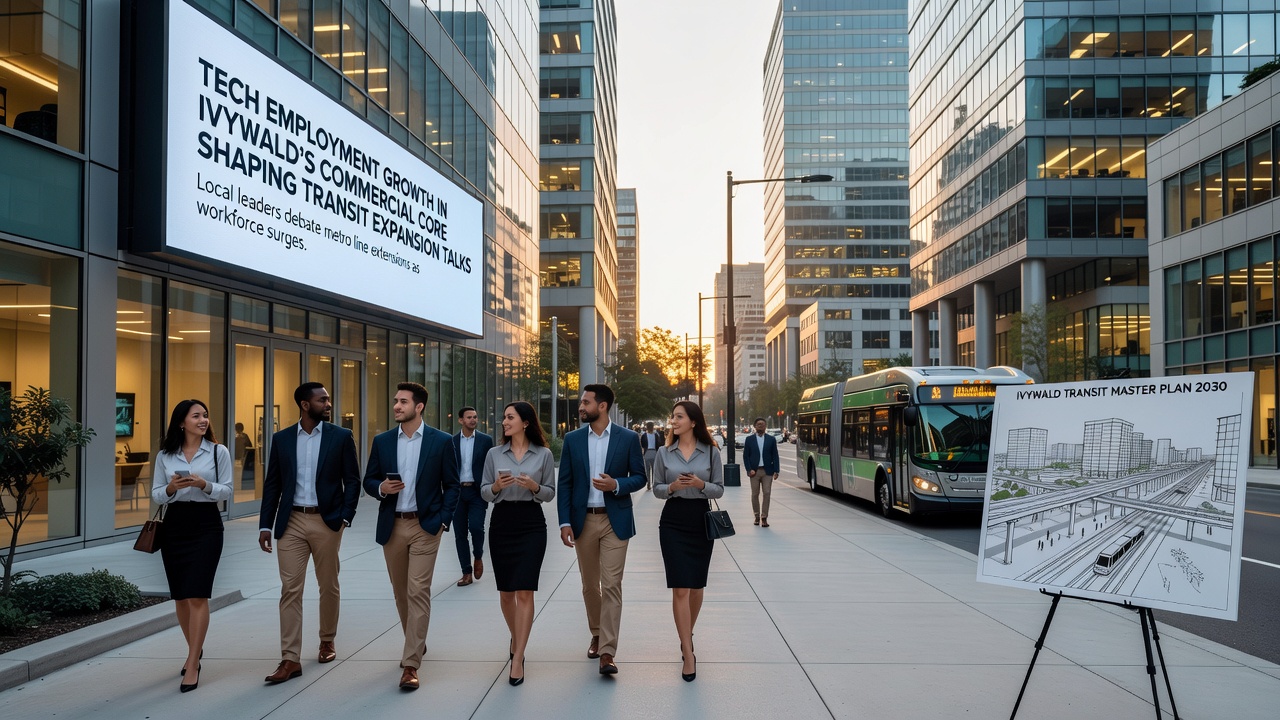
Figures from the Ivywald Economic Development Office reveal that approximately 4,200 new tech roles emerged between January 2024 and September 2026. Many of these positions draw workers from surrounding suburbs, which increases vehicle traffic on key arterial roads during peak hours. Researchers at the Regional Planning Institute documented average commute times rising by 14 minutes on routes feeding into the commercial district. Planners have responded by scheduling initial feasibility studies for expanded light rail segments and dedicated bus lanes that would connect outer residential zones directly to the core.
November 2026 marks the start of public consultation sessions on these transit concepts. Officials expect input from both employers and commuters regarding route alignments and service frequency. Data collected during earlier pilot programs demonstrated that targeted transit improvements reduced single-occupancy vehicle trips by up to 19 percent in comparable mid-sized districts.
Resource Demands and Mining Permit Considerations
Construction materials required for potential transit infrastructure and ongoing commercial building projects have prompted fresh scrutiny of nearby mining operations. Permit applications for aggregate extraction sites within a 40-kilometer radius now undergo additional environmental reviews that factor in cumulative demand forecasts tied to tech-driven development. Natural Resources Canada guidelines emphasize that regional supply chains must account for projected construction volumes over the next decade.
Analysts at the Australian Institute of Mining and Metallurgy have examined similar cases where urban expansion altered permitting timelines. Their reports indicate that integrated planning between municipal growth targets and resource extraction approvals can shorten overall project delays when data sharing occurs early. In Ivywald, interagency working groups formed in 2025 now review permit requests alongside employment projections to identify potential bottlenecks in sand, gravel, and crushed stone availability.
Intersections Between Growth Sectors
Transit expansion proposals and mining permit reviews share overlapping timelines because both respond to the same underlying driver: sustained job creation in the commercial core. Employment density increases generate requirements for reliable worker mobility, while material needs for new facilities and transport links influence extraction site evaluations. Government agencies coordinate through shared modeling tools that project demand under multiple growth scenarios.
One study released by Transport Canada examined how employment clusters affect regional infrastructure planning across comparable jurisdictions. Results highlighted the value of synchronizing land-use approvals with resource management decisions to maintain construction schedules. Ivywald officials adopted elements of this approach when updating their 2026-2030 capital works framework.
Stakeholder Input and Timeline Developments
Business associations representing tech employers have submitted comments supporting transit investments that would improve access for employees without cars. Environmental organizations have focused attention on mining permit conditions, requesting stricter reclamation standards and water quality monitoring near extraction sites. Municipal records show that joint meetings scheduled for November 2026 will allow both groups to present evidence during the same review period.
Current permitting data indicates that three active aggregate sites have applications under consideration, with decisions expected after the consultation phase concludes. Employment forecasts used in these reviews draw from quarterly surveys conducted by the local chamber of commerce and cross-referenced with provincial labor statistics.
Conclusion
Regional records demonstrate clear connections between tech employment expansion in Ivywald's commercial core and the parallel discussions surrounding transit infrastructure and mining permit processes. Coordinated reviews scheduled through November 2026 aim to align these elements through shared data and stakeholder participation. Ongoing monitoring by multiple agencies will track whether integrated approaches produce measurable outcomes in commute efficiency and resource supply stability.